
Why Your £5 Latte Is Here to Stay: Tariffs, Shipping Chaos and the New Coffee Economy
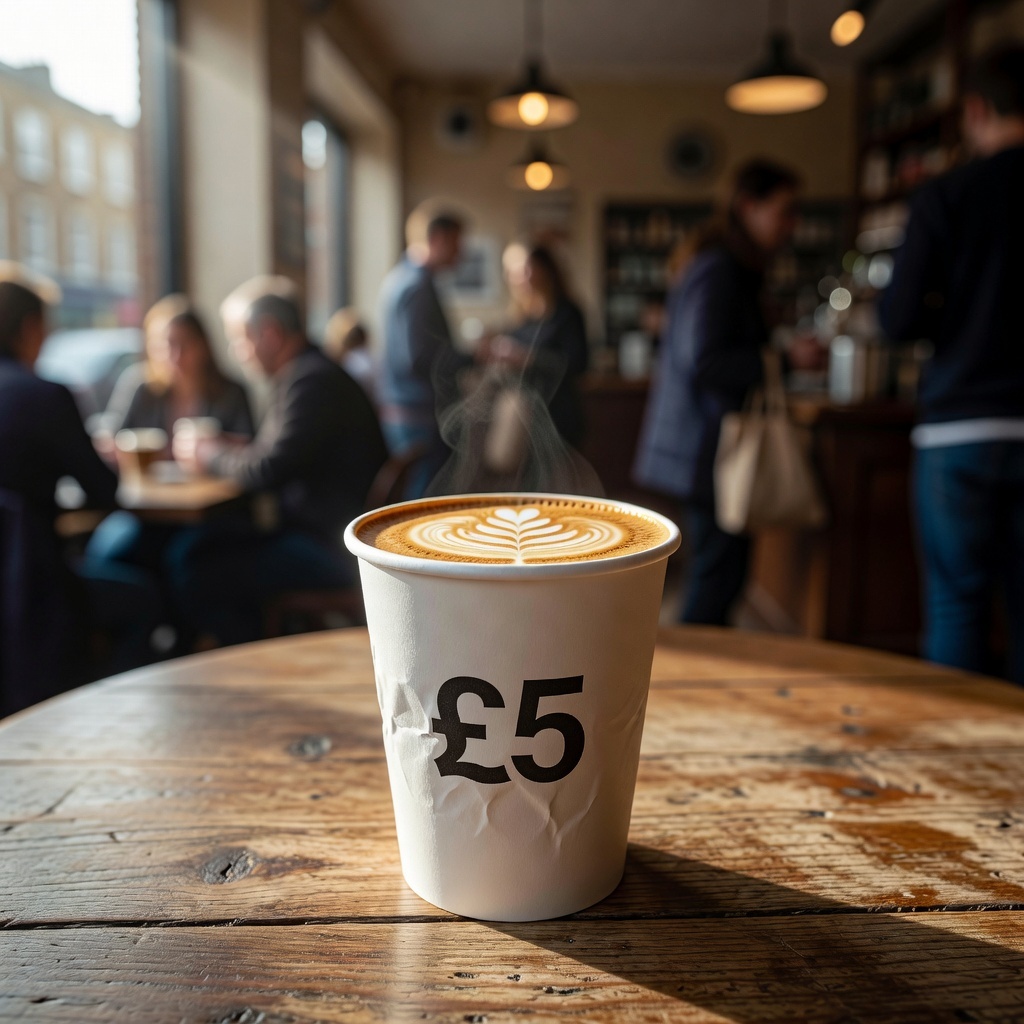
Why Your £5 Latte Is Here to Stay: Tariffs, Shipping Chaos and the New Coffee Economy
By Phoenix Conley — trade law expert
For years I made my living inside the machinery of international trade law — disputes, tariffs, supply chains, the quiet paperwork that decides whether a container of goods moves or sits. So when I started noticing that my morning flat white was creeping toward five pounds, I did what I always do: I stopped complaining about the price and started asking who, exactly, was charging it, and why.
The answer, as it turns out, is written all over the global economy. Coffee has become a mirror for everything happening in trade right now — tariffs, shipping detours, climate shocks, and a surprisingly stubborn consumer who keeps paying up. If you want to understand where the world economy is going, you could do worse than to watch a cup of coffee.
The Bean That Broke the $4 Barrier
Let's start with the raw commodity, because everything else follows from it.
Arabica — the high-grade bean behind your flat white — peaked above $4 per pound of green beans last year, up from a historical norm of around $1.20. It has settled at roughly $3.08. Robusta, the workhorse bean in espresso blends and instant coffee, climbed even more dramatically, touching $2.59 before easing to about $1.56. Both now cost significantly more than they did before 2020.
What happened? A perfect storm of supply shocks.
Vietnam — the world's robusta powerhouse — suffered its worst drought in decades in early 2024, with rainfall collapsing by 30%. A typhoon then hit during harvest. In Brazil, farmers are still recovering from a severe frost in 2021 that damaged the arabica crop. And a "super" El Niño predicted for this autumn threatens more turmoil in the Pacific.
Giuseppe Lavazza, whose family has run the coffee brand for 131 years, calls the last few years "an unprecedented time in terms of complexity and troubles." His warning is blunt: prices are unlikely to fall any time soon. "We have to wait for at least a couple of years, because we need two big crops from Brazil and Vietnam arriving on the market."
When Tariffs Hit the Coffee Belt
This is where my own field comes in — and where coffee stops being a breakfast drink and becomes a case study in trade policy.
A curiosity of the so-called "Liberation Day" tariffs was that coffee-producing nations were among the hardest hit. Vietnam faced a 46% tariff, Indonesia 32%, and Brazil 50% — after an escalation from an initial 10%. The coffee belt, it turned out, was also the tariff belt.
The result was chaos. Brazilian exports to the US fell off a cliff, more than halving last summer. Prices of beans from lower-tariffed countries like Colombia also rose, because American suppliers scrambled to import from wherever they could. And American drinkers noticed: roasted coffee prices surged 17% in the year to March, while instant coffee rose a near-record 25% — the fastest-rising item in the entire inflation basket apart from fuel oil. A bag of ground roast that cost $4.30 in 2020 hit $6.32 by 2024, and now sits near $9.61, heading for $10.
I found a certain dark irony in this. The tariffs were justified as punishment for countries "cheating America." But Vietnam's dominance in coffee is not cheating — it is what economists call comparative advantage, the simple fact that its climate and labour costs make it the most efficient producer. You cannot "reshore" coffee, because coffee needs a subtropical climate. It took an import collapse and a price spike for that rather obvious lesson to land.
The policy was eventually walked back — in November, Trump signed an executive order giving coffee beans (along with bananas and beef) a pass from the sweeping tariffs. But the damage to global coffee markets was already done, and the pattern is instructive.
The 4,000-Mile Detour
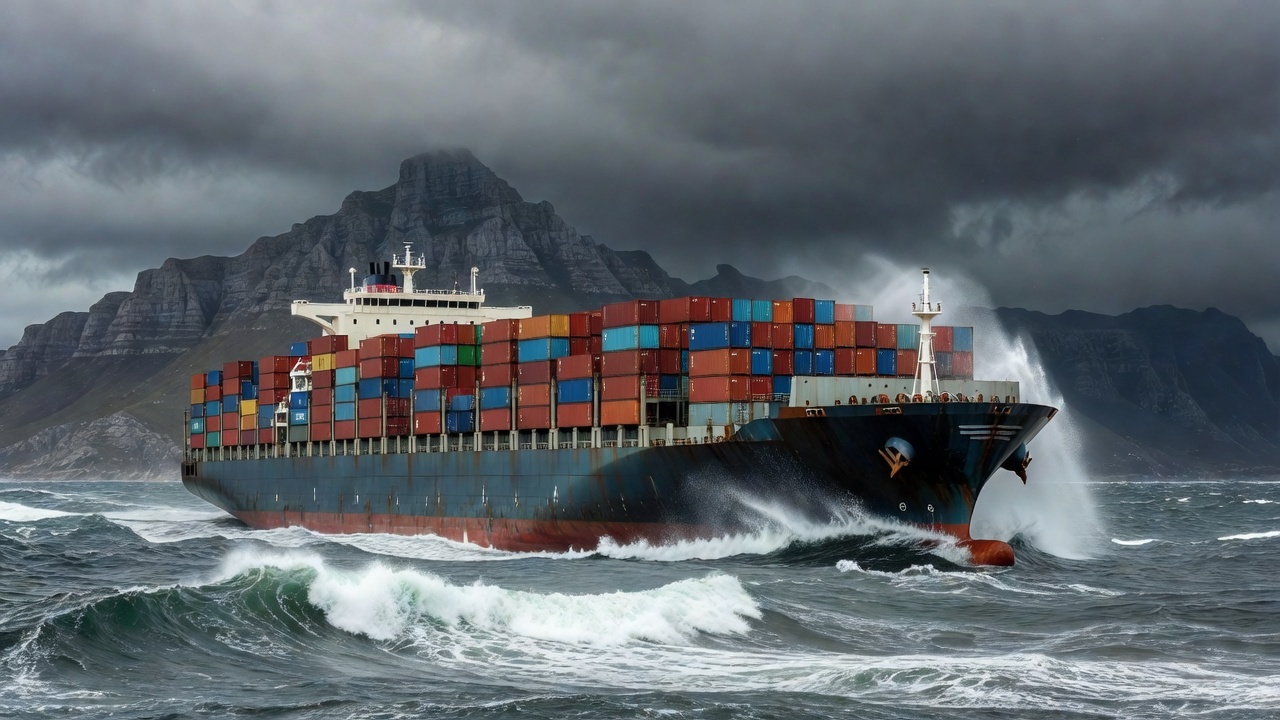
There's another cost hiding in your cup, and it has nothing to do with tariffs. It's the route the beans take to get to you.
Ships carrying Vietnamese robusta to Europe now loop around the southern tip of Africa to avoid Houthi militants at the Bab al-Mandab Strait, at the southern end of the Red Sea. That journey is roughly 4,000 miles longer than it was before 2024. Every extra mile is fuel, time, insurance premiums — and ultimately, a few more pence in your latte.
This is the same dynamic playing out across global trade right now, and it's a thread I've written about elsewhere — in my analysis of how sanctions and conflict reshape oil, gold and the global economy — when looking at the way trade policy reshapes supply chains. The economics of the Iran war shows the same pattern at work. The Red Sea detour is not a coffee problem; it's a trade-infrastructure problem that happens to show up first in the goods you buy every morning.
The Price of a Forest
Europe is adding its own layer of cost. New EU anti-deforestation rules, rolling out across 2026 and 2027, will require Vietnamese and Brazilian suppliers to provide the GPS coordinates of their plantations. EU officials will use satellite images to verify the beans don't come from land that was forest in the past five years.
The policy has been repeatedly delayed, but the cost for farmers is already accumulating — compliance, data collection, monitoring. It's well-intentioned regulation, but it is also, unavoidably, another line on the bill.
Why We Keep Paying
Here's the genuinely fascinating part. Despite all of this, demand is holding.
Coffee demand is what economists call inelastic — it doesn't respond much to price. "We saw that despite the high prices, people love having coffee," Lavazza says. "We don't see any significant decrease in terms of volumes in the most important countries."
This has given rise to what the industry calls "premiumisation" — making the product look fancier to justify the higher price. Cold brews are fashionable among young people. Chains like the former Blank Street Coffee sell elaborate fruit-and-cake-themed concoctions, with baristas acting as "brand ambassadors." Some shops have drifted so far they've dropped coffee entirely, betting on matcha's bright emerald TikTok appeal.
The ultimate example is China's Luckin Coffee, chasing Starbucks for the title of the world's biggest chain. Luckin runs on astonishingly detailed customer data — it knows when your phone is near a kiosk, adjusts sugar levels and milk ratios to your taste, and even changes recommendations with the weather. Its cafes aren't for lingering; they're for rapid, app-ordered caffeine delivery.
And at the other end of the market, Britain's Greggs holds prices down through automation, using bean-to-cup Swiss machines to serve a regular latte at around £2.40. It is now Britain's largest coffee provider, with more outlets than Costa.
What This Means for Your Cup
So here's my take, as someone who reads trade policy for a living rather than as a barista.
We are looking at a story in two halves. On one side, a supply-chain tsunami — climate shocks, geopolitical tensions, tariffs, shipping detours, new regulation — pushing costs relentlessly upward. On the other, a coffee-loving public that keeps paying, because the price of a daily ritual is one of the last things people are willing to give up.
The commodity price surge matters in supermarkets. But in cafes, it matters less, because modern coffee shops have become sellers of experiences, not just drinks. And even if Brazilian and Vietnamese harvests normalise and raw coffee retreats a little, the costs that have been built into the system — longer shipping routes, compliance, premiumisation — will keep prices sticky.
That £5 large latte is not a passing trend. It is the new normal, and it tells you more about the state of the global economy than any headline.
My advice? Learn to enjoy it — because it's going to be around for a while. And the next time someone asks you why your coffee costs what it does, you'll have a better answer than "inflation." You'll know the whole story, from the drought in Vietnam to the tariffs in Washington to the container ships rounding the Cape of Good Hope.
Phoenix Conley is a trade law expert and a contributor to the Coffee editorial team at HolikStudios Media Group.
It’s fascinating how the “premiumisation” of coffee mirrors the way we see high-end boutique gear markets where the experience and the “ritual” of the craft justify a price point that would otherwise seem absurd to the uninitiated, a trend I’ve also noticed in the hardware space where the aesthetic and “vibe” often outweigh the raw specs.
While we’re discussing the sticky inflation of our morning caffeine, I found myself thinking about how these global trade frictions and shipping detours also impact the availability of specialized components for my own modular rigs, which is why I recently came across this interesting perspective on Advance Wars 1+2 Re-Boot Camp; it makes me wonder, if the global supply chain remains this volatile, will we see a shift toward even more radical “home-grown” production and open-source hardware to bypass these escalating trade barriers?
That’s a compelling point, Chance. I definitely agree with your observation on the “premiumisation” of coffee. As a scientist, I find the psychology of the “ritual” fascinating; we aren’t just paying for the chemical caffeine delivery, but for a curated experience that feels like a luxury. It mirrors that shift in hardware where the “vibe” and aesthetic become the primary value drivers over raw specifications.
However, I’d argue that while the ritual justifies the price point for many, we shouldn’t overlook the underlying logistics. While you see it as a boutique trend, I view it through a more systemic lens. The “sticky inflation” isn’t just a byproduct of marketing; it’s a structural shift in global trade. If we only focus on the “experience,” we risk ignoring the fact that the baseline costs for high-quality beans and specialized components are being fundamentally rewritten by trade frictions.
Regarding your point on a shift toward radical “home-grown” production and open-source hardware that’s a fascinating hypothesis. While I believe local production could mitigate some supply chain volatility, do you think the complexity of modern hardware allows for a truly “open-source” bypass of global trade barriers? From my perspective, the infrastructure required for high-end production is so deeply integrated globally that a complete decoupling might be more of a logistical nightmare than a viable solution for the average consumer. It’s a fascinating intersection of technology and geopolitics!