Stop guessing your grind size
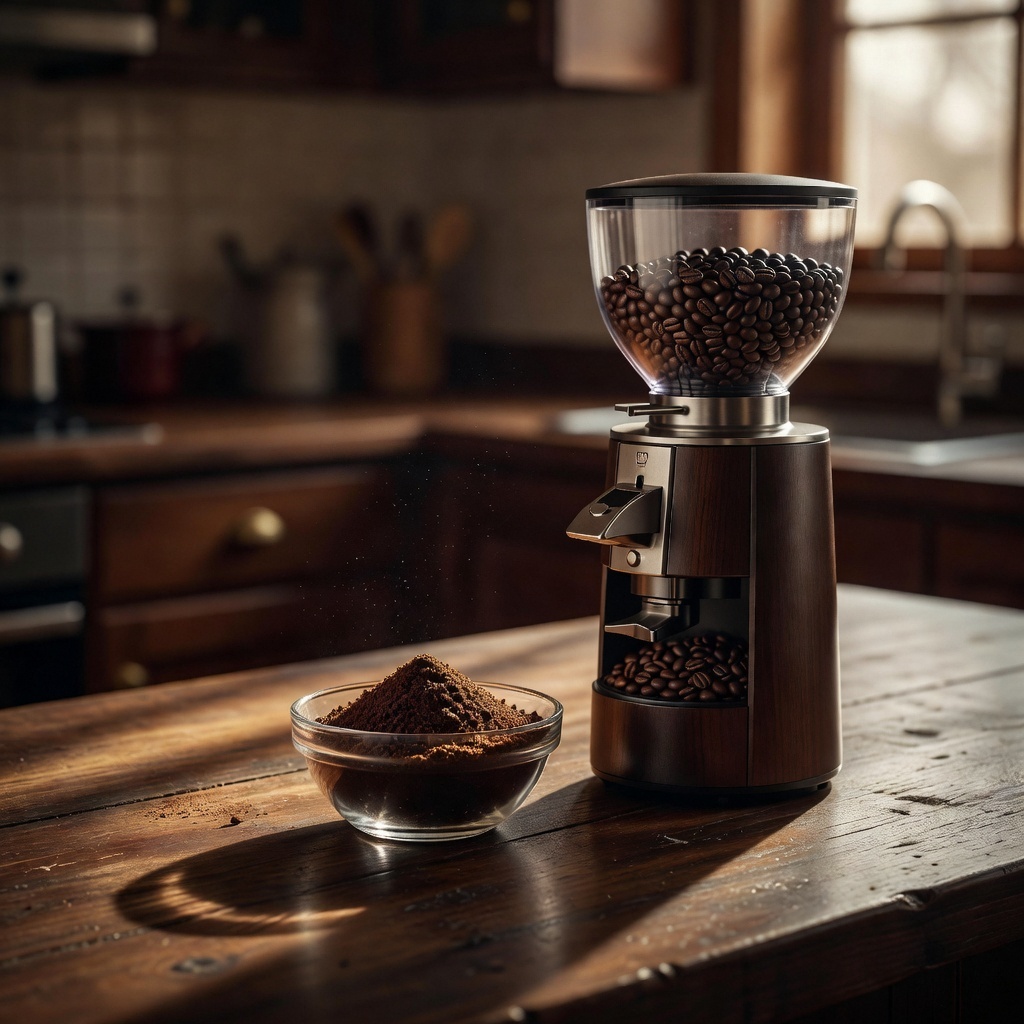
Stop guessing your grind size
Most disappointing cups at home are not a bean problem. People buy fresh roasted coffee, weigh it, use filtered water, and still get something thin and sour or harsh and bitter. The variable that gets the least attention is the one that decides almost everything: how fine the coffee is ground for the brewer in front of you.
That is the gap the new grind size calculator on this site was built to close. It takes the brew method you are using and the grinder you own, and turns them into a starting setting you can actually dial in.
Why grind size decides the cup
Grind size controls how much surface area water can reach and how quickly it passes through the bed of coffee. Too fine and the water stalls, extraction runs long, and the cup turns bitter and muddy. Too coarse and water races through, leaving behind the acids and sugars that never got pulled out. The result tastes sour, weak and papery.
The window between those two failures is narrow for espresso and much wider for a French press. That is why a setting that works beautifully in one brewer can be undrinkable in another, and why the same bag of beans can taste completely different on two grinders. It is rarely the beans. It is the particle distribution.
What the calculator actually does
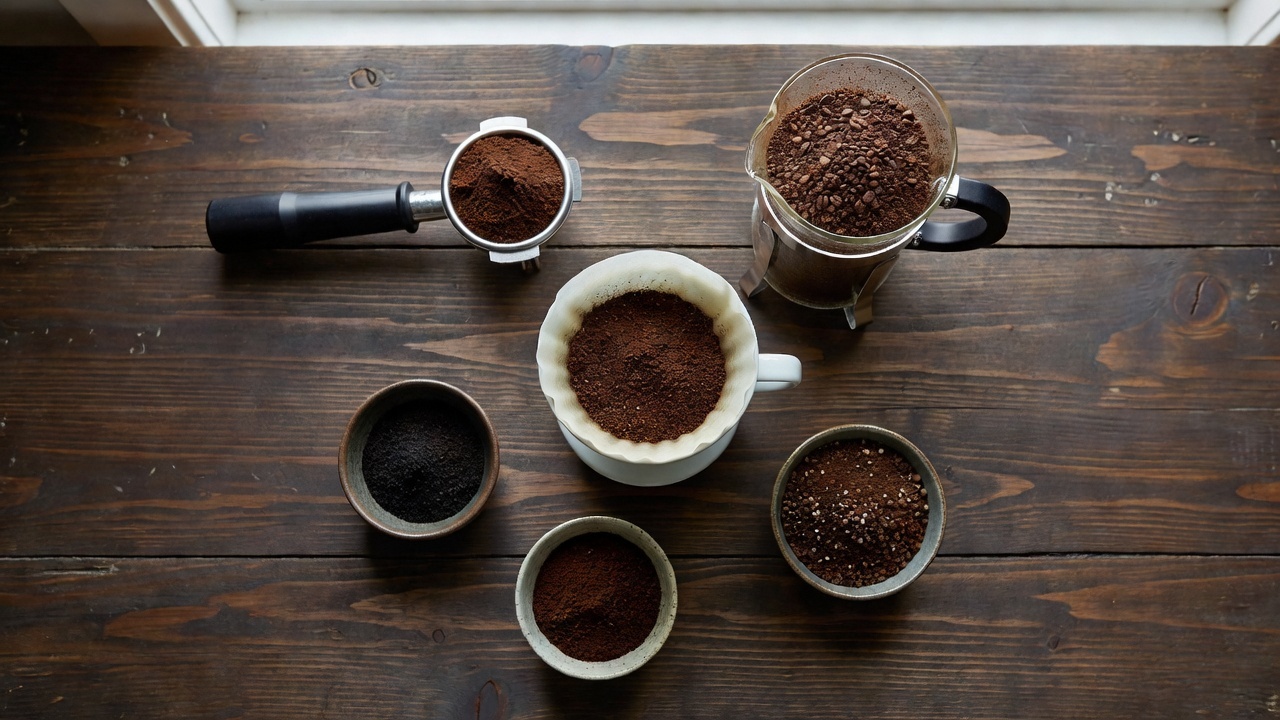
Most grind charts online give you a picture of coffee grounds and a vague label like medium fine. That is a starting point for the eye, not a number you can set.
This tool works the other way around. Every brew method has a target particle size in microns, and every grinder in the database has a range that maps onto those microns. You pick the method, you pick the grinder, and the calculator converts the target into a setting on your equipment.
A few details make it more useful than a static chart:
- 101 grinders are covered, from cheap blade grinders to flat burr espresso machines.
- Eight brew methods each have their own micron window.
- Stepped grinders return a step number. Stepless grinders return a percentage of the dial.
- A taste adjustment moves the recommendation finer or coarser without you having to guess how far.
The grinder list covers the models seen most often in the UK and the US. If yours is missing, the advice is sensible: pick the closest model with the same burr type and treat the micron target as your guide.
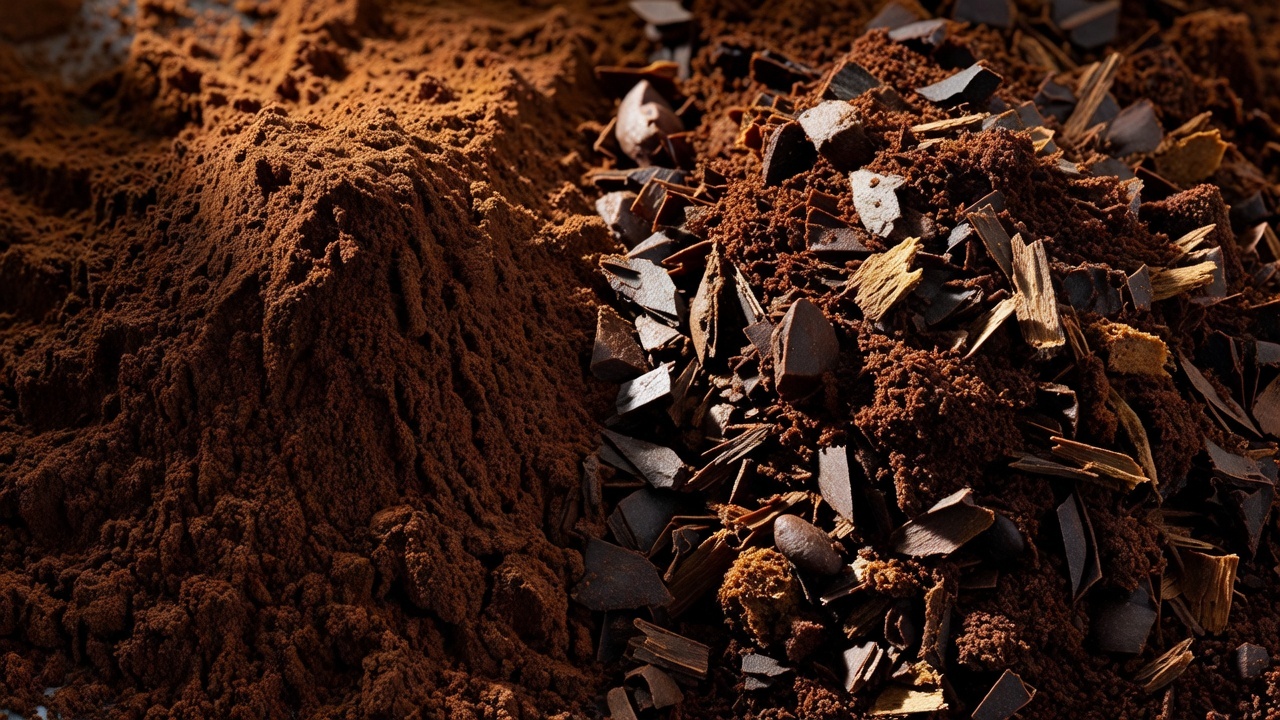
How to use it
Start with the brewer you are using right now. Espresso and Turkish sit at the fine end, cold brew at the coarse end, and everything else lands somewhere between.
Then type your grinder into the search box. If it is not listed, match the burr type and the micron range rather than chasing an exact model number. A conical burr grinder with a similar range will behave close enough for a first setting.
Set the grinder to the recommendation and brew. Then taste, and change exactly one thing:
- Sour, thin, sharp? Go one step finer.
- Bitter, dry, ashy? Go one step coarser.
- Roughly balanced but a little flat? Adjust dose or water temperature before touching the grind again.
Change one variable at a time. Dose, water temperature and brew time all affect extraction, so give each setting a fair test before moving on. Two or three brews is usually enough to find the right zone.
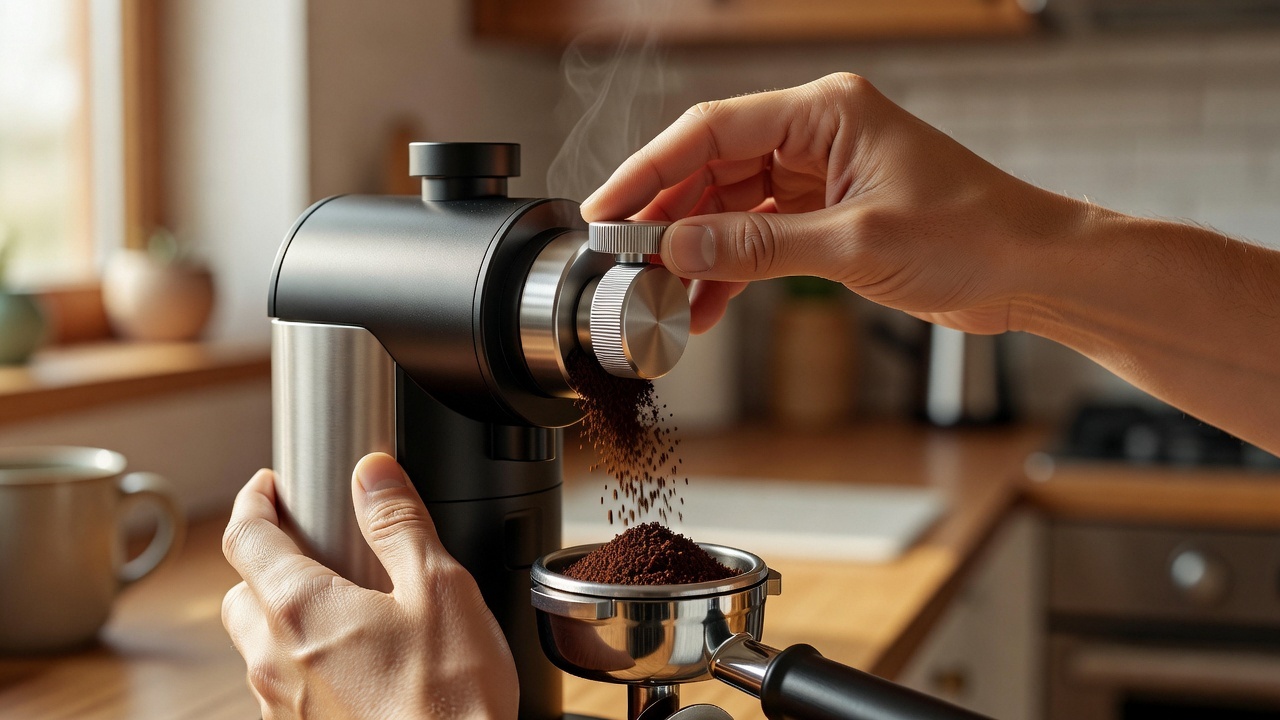
If your grinder is stepless, use the suggested percentage of the dial as a starting point and then mark the position with tape or a marker. Stepless grinders reward small repeatable changes, and a mark turns a guess into a reference point.
Where the tool stops being useful
A calculator can get you into the right neighbourhood. It cannot fix stale beans, chlorinated water, a dose that is off by five grams, or a blade grinder that produces a cloud of dust and boulders in the same batch.
It also cannot know that your burrs were replaced last month or that the grinder has drifted since the last cleaning. Manufacturer specs are used where they exist, and some budget models rely on community measurements and sieve tests. Those entries are marked as estimated, and they should be treated as a direction rather than a precise number.
What the tool does remove is the most common form of wasted coffee: guessing at a setting, getting a bad cup, and changing three things at once so you never learn what actually helped.
A better starting point than a chart
Grind size is the cheapest variable to change and the one with the biggest effect on what ends up in your cup. Starting from a micron target instead of a photo of grounds means the first brew of a new bag has a real chance of being close.
The calculator is free and needs no account: coffee grind size calculator. Pick your brewer, find your grinder, and spend the next two cups dialling in instead of guessing.