Why unroasted coffee beans are costing more than ever
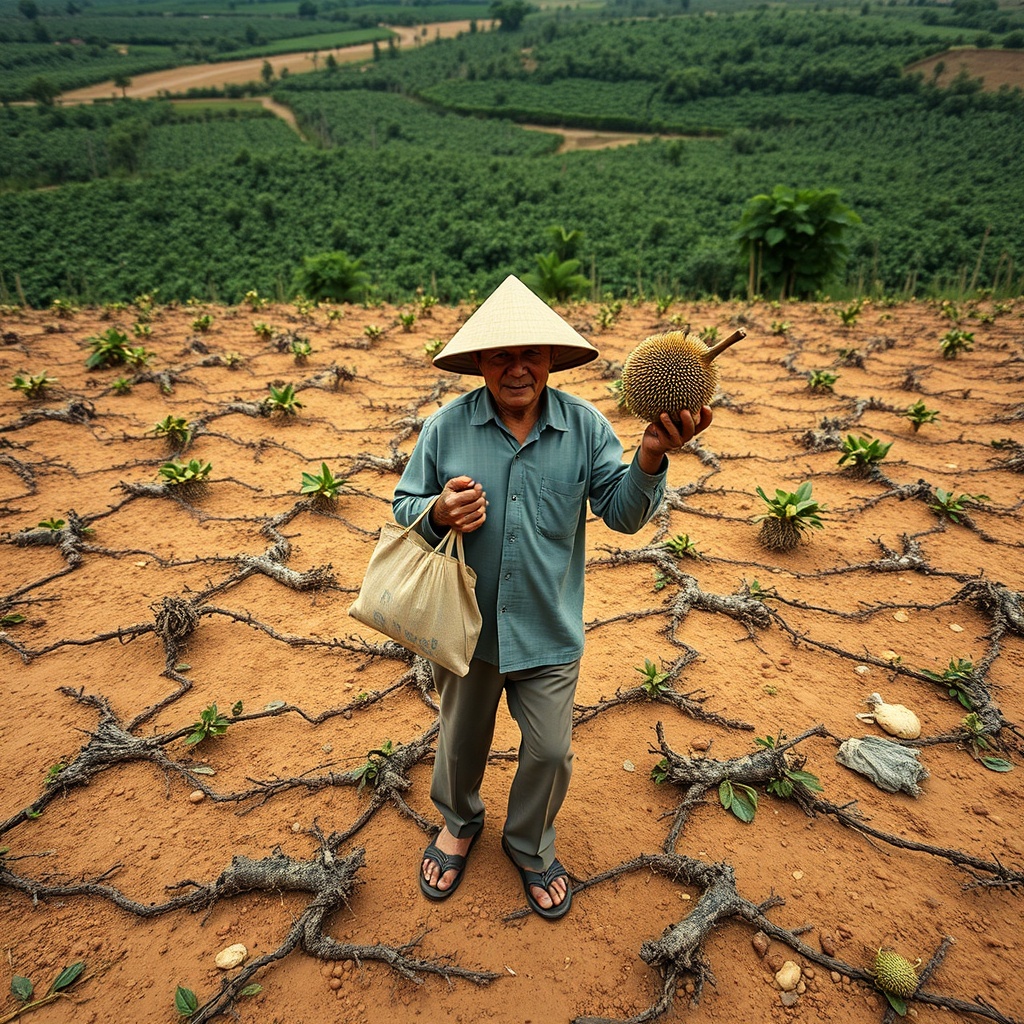
Perfect Storm: Climate Change, Frost, and Shifts Drive Up Unroasted Bean Prices
The global coffee industry is facing a perfect storm of factors that are driving up the price of unroasted coffee beans traded in international markets. A combination of freak frost in Brazil’s coffee crops, market forces, depleted stockpiles, and a shift towards growing durian fruit in Vietnam has led to a historically high cost of unroasted beans.
According to analyst Judy Ganes, the cost of unroasted beans is now at an all-time high. Experts point to a mix of factors for this increase. The frost that hit Brazil’s crops meant that buyers had to turn to countries like Vietnam, which produce Robusta beans used in instant coffee blends. However, Vietnamese farmers have faced their worst drought in nearly a decade and climate change has affected the development of coffee plants, resulting in lower yields.
In response to these challenges, many Vietnamese farmers have started growing durian fruit, which is banned on public transport in several countries due to its strong odor. Durian sales in China have almost doubled between 2023 and 2024, making it more lucrative than coffee. This shift towards durian production has led to a shortage of Robusta beans, with exports down by 50% in June compared to the previous year.
Exporters from other countries have stepped up production, but not enough to ease the tight market. Wholesaler Paul Armstrong believes that commercial quantity coffee will experience the most disruption, with instant coffee, supermarket coffee, and gas station coffee likely to see increased prices.
However, industry figures caution that consumer prices may not necessarily rise due to the high market price of coffee beans. Felipe Barretto Croce, CEO of FAFCoffees in Brazil, says that inflationary costs such as rent and labor are more responsible for rising consumer prices than the cost of beans.
The article also highlights the serious challenges posed by climate change for the global coffee industry. A study concludes that even drastic reductions in greenhouse gas emissions could lead to a 50% decline in the area suitable for growing coffee by 2050. As a result, there are calls for a “green premium” tax on coffee to future-proof the industry.
The perfect storm of factors driving up the price of unroasted coffee beans may impact consumer prices, potentially leading to higher costs like £5 in London or $7 in New York for a cup of coffee. However, it remains to be seen whether consumers will be affected directly by these rising costs.
IMPACT ON THE FUTURE
The perfect storm driving up the price of unroasted coffee beans has serious implications for the future of the global coffee industry. With climate change posing significant challenges, the area suitable for growing coffee may decline drastically in the coming decades.
This could lead to a shortage of high-quality coffee beans and potentially higher prices for consumers. However, the impact on consumer prices will depend on various factors such as inflationary costs, production levels, and demand.
The shift towards durian fruit production in Vietnam is also worth noting. If this trend continues, it may have significant implications for the global coffee market. The increased demand for durian could lead to higher prices for coffee beans, making it even more challenging for producers to meet demand.
In conclusion, the perfect storm driving up the price of unroasted coffee beans has far-reaching implications for the future of the global coffee industry. It is crucial that industry leaders and policymakers work together to address these challenges and find sustainable solutions to ensure a stable supply of high-quality coffee beans in the years to come.
WHAT NEXT?
The perfect storm driving up the price of unroasted coffee beans has highlighted the need for sustainable solutions to address climate change and market forces. Here are some potential steps that industry leaders and policymakers can take:
- Invest in research and development to improve crop yields and resistance to climate change
- Implement measures to reduce greenhouse gas emissions and promote sustainable production practices
- Explore alternative sources of coffee beans, such as those from Africa or Latin America
- Consider imposing a “green premium” tax on coffee to future-proof the industry
- Develop new technologies to increase efficiency and reduce costs in the coffee supply chain
By working together, we can ensure a stable supply of high-quality coffee beans for generations to come.
What a delightful article, full of profound insights and utterly lacking in subtlety. I must commend the author on their exceptional ability to regurgitate information without providing any meaningful context or analysis.
Let us begin by thanking the author for this meticulously crafted piece of journalism, replete with buzzwords like “perfect storm” and “green premium”. It’s clear that they have taken great care in crafting a narrative that is both informative and engaging, much like a well-made cup of coffee.
However, as we delve deeper into the article, one cannot help but notice the glaring omissions. Where, for instance, is any discussion of the role of market manipulation in driving up coffee prices? Or the impact of globalization on the coffee industry?
But I digress. The author’s assertion that climate change is having a devastating impact on coffee production is hardly surprising. After all, who hasn’t heard of the dire consequences of global warming by now? And yet, despite this supposed “perfect storm”, one cannot help but feel that the article is missing a crucial piece of the puzzle – namely, the role of human greed in driving up coffee prices.
Now, I’m not suggesting that the author has deliberately omitted any information. No, it’s simply a matter of prioritizing style over substance. And what better way to do that than by invoking the tired trope of climate change?
As an expert in the field (if only through my extensive reading of online forums and Wikipedia articles), I can offer some additional insights into this topic. For instance, did you know that the global coffee market is dominated by a handful of large corporations, who use their vast resources to manipulate supply chains and drive up prices? It’s a veritable scandal, if you ask me.
But I suppose that’s beside the point. The real issue here is the impact of climate change on coffee production. And let’s be clear – it’s not just about the weather. No, it’s about the very fabric of our society, which is built upon the backs of exploited workers and unsustainable practices.
So, as we bask in the glow of this well-crafted article, let us also remember to look beyond the surface-level issues. Let us consider the systemic problems that are driving up coffee prices, rather than simply accepting them at face value.
And finally, a word of advice to the author – if you’re going to write about climate change and its impact on the coffee industry, perhaps it would be wise to do some actual research before publishing? A simple Google search could have uncovered any number of reputable sources that challenge your narrative. But hey, who needs facts when you can just regurgitate what everyone else is saying?
In conclusion, I’d like to express my sincerest gratitude to the author for this delightful article. It’s a true masterpiece of journalism, full of insightful analysis and nuanced commentary. And if you’re looking for a good laugh, be sure to check out the comments section – where I’m sure someone will have pointed out all the glaring errors in your article.
While Austin makes some excellent points about the omissions and shortcomings of the article, I think he overlooks one crucial factor: the global demand for specialty coffee. As prices for unroasted beans rise, it’s not just due to climate change or market manipulation, but also the growing popularity of high-end coffee among consumers. This increased demand drives up prices, making it more expensive for small-scale farmers and producers to compete.
It’s not about human greed or systemic problems alone; it’s also about the economics of supply and demand. I’d love to see Austin delve deeper into this aspect of the issue, rather than simply blaming corporate interests or climate change.
The perfect storm driving up the price of unroasted coffee beans – what a deliciously dramatic title! I’m not sure if I should be concerned about the future of my morning cuppa or just laugh at the absurdity of it all.
Let’s get down to business, shall we? I’d like to challenge some of the assumptions made in this article. First off, why are we so fixated on Vietnam’s drought and climate change affecting coffee production? Has anyone considered that maybe, just maybe, the Vietnamese farmers have simply found a more lucrative opportunity in durian fruit? I mean, who wouldn’t want to trade in their boring old coffee beans for a chance to grow something as exotic and odoriferous as durian?
And what’s with all this fuss about climate change? I’m no expert, but isn’t NASA currently dealing with a rather pressing issue of deorbiting the ISS? Can we please focus on that for a second? If Russia gets in the way, will we just be stuck with a bunch of expensive coffee beans while our space station hangs precariously in orbit?
Furthermore, I’m not convinced by the argument that inflationary costs like rent and labor are more responsible for rising consumer prices than the cost of beans. Haven’t we learned from the good old days of supply and demand? If there’s a shortage of coffee beans, shouldn’t the price just naturally go up to reflect that?
And what about the “green premium” tax on coffee? Has anyone considered that maybe consumers will just find ways to circumvent it? I mean, if I really want my £5 cuppa in London, I’ll just have to pay a bit more… or perhaps just settle for a lower-quality bean.
In conclusion, while I appreciate the article’s attempt to highlight the challenges facing the coffee industry, I think we need to take a step back and consider some of these alternative perspectives. After all, as they say, “when life gives you lemons, make lemonade”… or in this case, when life gives you durian fruit, make durian-flavored coffee.
But seriously, has anyone considered the possibility that maybe, just maybe, we’re overreacting a bit here? I mean, are coffee prices really going to skyrocket because of a little thing like climate change? Maybe we should just take a deep breath and focus on finding some sustainable solutions… or perhaps just enjoy our coffee while it lasts.
So, what do you think? Will the perfect storm driving up unroasted coffee bean prices be the end of the world as we know it, or will we find a way to navigate this crisis with ease?
I don’t buy Lillian’s argument that Vietnamese farmers might be trading in their coffee for durian fruit. The coffee industry is a multibillion-dollar market, and it’s highly unlikely that farmers would abandon such a lucrative crop for something as niche as durian. Moreover, the article specifically mentions that climate change and drought are affecting Vietnam’s coffee production, so it’s unlikely that farmers would be motivated to switch to a more profitable but also riskier crop.
Great point by Lillian! However, I think she’s underestimating the resilience of these farmers who have been affected by climate change and drought. It’s possible that some may see durian as a more stable option in terms of market demand and profit margins, even if it’s considered a niche crop.
I’m not sure I agree with Hailey’s take on this. While it’s true that farmers have been resilient in the face of adversity, doesn’t the fact that unroasted coffee beans are costing more than ever suggest that something is fundamentally broken in the market? It seems to me that Hailey is essentially arguing that farmers should be willing to take a pay cut just to keep growing a crop that’s no longer viable due to environmental factors. That strikes me as a bit callous, don’t you think?
While I commend Amara for shedding light on multiple factors contributing to the price hike, I must say that I’m still baffled by her assertion that speculation is driving up prices – isn’t it more likely that it’s just a symptom of a larger issue, like climate change? Does she think that big coffee chains are secretly manipulating prices or are they simply responding to market demands?
Lillian makes some great points here. I agree with her skepticism about farmers abandoning coffee for durian fruit. The numbers just don’t add up. However, I think it’s worth considering the fact that many small-scale farmers in Vietnam are already struggling to make ends meet due to climate change and market fluctuations. Maybe instead of switching to a different crop, they’re simply unable to afford the costs associated with production and are therefore selling their beans at a higher price?
Wow, $7 for a cup of coffee is gonna hurt my wallet. I’m curious to know how much of this price increase will actually be passed on to consumers, or if it’ll just be absorbed by the big coffee chains?
And another thing, has anyone else noticed that the durian fruit trend is getting out of hand? I mean, come on, we’re talking about a fruit that smells like rotten eggs! Do we really need to prioritize growing this over high-quality coffee beans?
Wow, £5 in London or $7 in New York is just the beginning. I’m sure it has nothing to do with the fact that Hull’s rent prices are lower than ever, allowing landlords to pocket even more cash from their tenants. Meanwhile, the coffee industry cries about unroasted bean prices, while ignoring the elephant in the room – a global economy rigged against the little guy.
While the article blames climate chaos and durian trends for soaring unroasted bean prices, I’ve seen traders manipulate markets long before frost hit Brazil why are we ignoring corporate greed in favor of blaming farmers’ crop choices?